
Constant Contact vs HubSpot (plus mailfloss): Which Email Marketing Stack Fits Your Business in 2026?
Compare Constant Contact vs HubSpot for email marketing in 2026 — and see why mailfloss keeps both performing at their best.

Constant Contact vs HubSpot — which should you choose?
Choose Constant Contact for simple, affordable email marketing built for small businesses and events; choose HubSpot when you need a full CRM with marketing, sales, and automation in one platform. Either way, list quality drives deliverability — mailfloss connects to both to verify emails, fix typos, and clean inactive contacts automatically.
- Constant Contact: easiest setup, event tools, budget-friendly for small teams.
- HubSpot: deep CRM, automation, and reporting — better for scaling revenue teams.
- Both bill by contact count, so unverified addresses cost you money and deliverability.
- mailfloss verifies and cleans lists in both — no developer needed.
Constant Contact vs HubSpot (vs mailfloss): Which Email Marketing Stack Fits Your Business in 2026?
Choosing between Constant Contact and HubSpot for your email marketing comes down to five questions:
- Do you need a simple email marketing tool, or a full CRM and marketing automation platform?
- Is your priority sending newsletters and event invitations, or building multi-channel sales funnels?
- Are you a small team that values phone support, or a growing company that needs sales, service, and marketing in one system?
- Can your budget absorb per-seat pricing that scales with your team, or do you need flat monthly costs?
- Do you understand how email list quality affects everything else you're trying to do with either platform?
In short, here's what we recommend:
Constant Contact is the reliable choice for small businesses and nonprofits that need email marketing without a steep learning curve. Founded in 1995, it's one of the longest-running email platforms on the market, with a claimed 97% deliverability rate, built-in event management, and live phone support six days a week on every paid plan. For organizations that send weekly newsletters, manage donor communications, or promote local events, Constant Contact gets the job done fast. Its automation, however, is limited to a single trigger per path, pricing climbs steeply as your list grows, and the platform offers no CRM or sales pipeline features.
HubSpot is the full customer platform for scaling businesses that need marketing, sales, and service under one roof. Its Smart CRM connects every contact interaction across email, website, social, and phone into a single record, while Breeze AI agents handle tasks from prospecting to customer support. With 288,706 customers across 135+ countries, HubSpot serves businesses from startup to enterprise. The tradeoff is complexity and cost: per-seat pricing, mandatory onboarding fees at Professional and Enterprise tiers, and a feature set that can overwhelm teams who only need email.
Both platforms deliver email marketing. But here's what neither will emphasize: every email you send to an invalid address damages your sender reputation, reduces inbox placement for real subscribers, and wastes money on contacts who don't exist. Whether you choose Constant Contact or HubSpot, your results depend on the quality of your list.
mailfloss is the automated email verification service that connects directly to both Constant Contact and HubSpot (two of exactly 40 native ESP integrations) and cleans your list daily without manual effort. It identifies invalid, fake, and risky addresses before they trigger bounces, and its Auto Typo Fixer recovers real subscribers by correcting misspelled domains like "gmial.com" and syncing the fix back to your ESP. mailfloss isn't a replacement for either platform. It's the foundation that makes whichever one you choose work.
If automated list hygiene sounds like the missing piece of your email strategy, see how mailfloss works with your platform.
Constant Contact vs HubSpot at a glance
Constant Contact | HubSpot | mailfloss | |
|---|---|---|---|
Primary focus | Email marketing and events | Full CRM and marketing platform | Automated email list verification |
Best for | Small businesses, nonprofits | Scaling businesses, B2B teams | Any business using email marketing |
Starting price | $12/mo (Lite, 500 contacts) | $0 (free CRM); $20/seat/mo (Starter) | $29/mo (10,000 verifications) |
Automation depth | Basic (single trigger per path) | Advanced (multi-step branching workflows) | Fully automated daily cleaning |
CRM included | No | Yes (Smart CRM on all tiers) | N/A |
Sales tools | No | Full pipeline, CPQ, forecasting | N/A |
Phone support | All paid plans | Professional and Enterprise only | Email support |
Free plan | No (30-day trial only) | Yes (permanent, with limitations) | 7-day trial |
AI features | Content generation, subject line optimization | Breeze AI agents across all hubs | Automated detection and typo correction |
Email deliverability | 97% claimed rate | Good built-in practices | Directly improves deliverability |
One is an email tool, the other is a business platform
The most important thing to understand about this comparison: Constant Contact and HubSpot are not the same category of product.
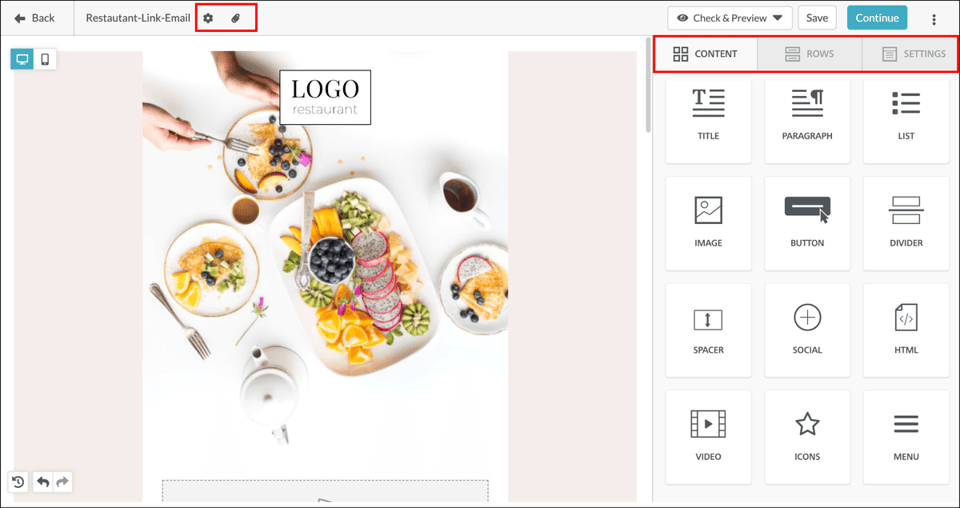
Constant Contact is an email marketing platform with some extras. You use it to design emails, send campaigns, manage a contact list, and promote events. It does those things well, especially for people without marketing experience. The drag-and-drop editor works on all plans, the AI Content Generator can draft a full email from a prompt, and the template library is organized by industry so you're not starting from a blank page.
Source: Constant Contact
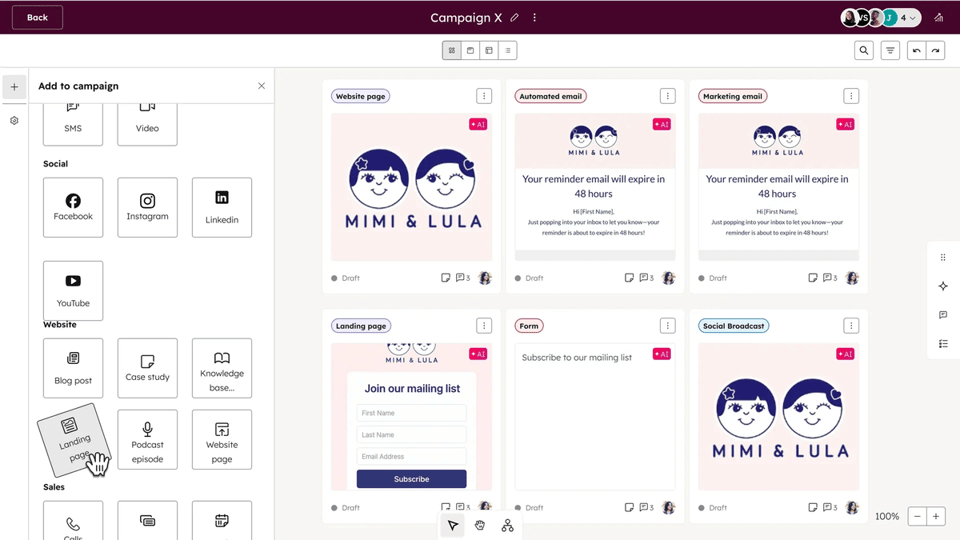
HubSpot is a customer platform that includes email marketing as one of many features. Marketing Hub, Sales Hub, Service Hub, Content Hub, Data Hub, and Commerce Hub all share a single Smart CRM. When a contact opens your email, visits your website, talks to a sales rep, and submits a support ticket, HubSpot connects it all in one record.
Source: HubSpot
This difference shapes everything: pricing, complexity, learning curve, and who each platform serves well. Constant Contact is a tool you use. HubSpot is a system you run your business on.
Constant Contact wins on simplicity and support
If you've never run an email campaign before, Constant Contact is designed for you. The platform earns high marks from Capterra reviewers (primarily organizations with 2-50 employees) for intuitive setup and fast time-to-first-send, often under 30 minutes.
The support model reinforces this. Constant Contact offers phone support Monday to Friday 8am-8pm ET and Saturday 10am-6pm ET on every paid plan, not just premium tiers. A small business owner who needs help formatting a holiday promotion at 4pm on a Tuesday gets a direct line to a human. HubSpot reserves phone support for Professional and Enterprise subscriptions, and free-tier users get community forums only.
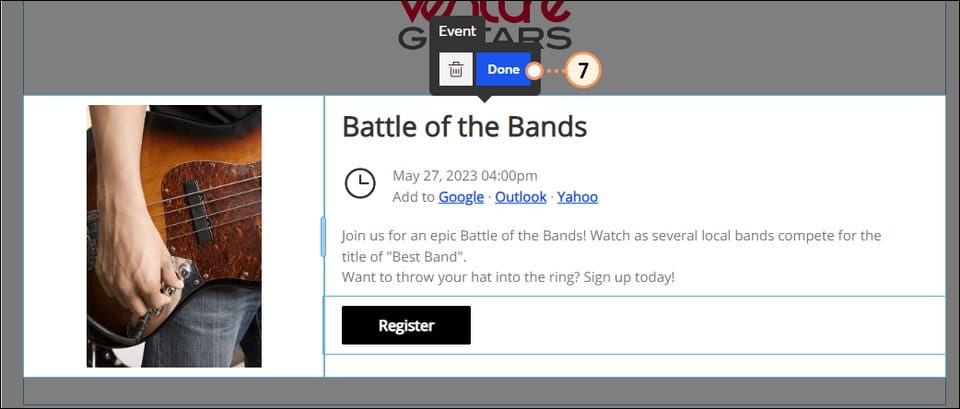
Constant Contact also includes something most email platforms don't: built-in event management with ticket sales, RSVP tracking, Stripe and PayPal payment processing, and automated attendee follow-up. For nonprofits running galas or local businesses hosting workshops, this replaces a separate tool like Eventbrite.
Source: Constant Contact
The 30% prepay discount for nonprofits is another draw for organizations watching every dollar.
HubSpot wins on automation and scale
Where Constant Contact's automation hits a ceiling, HubSpot keeps building.
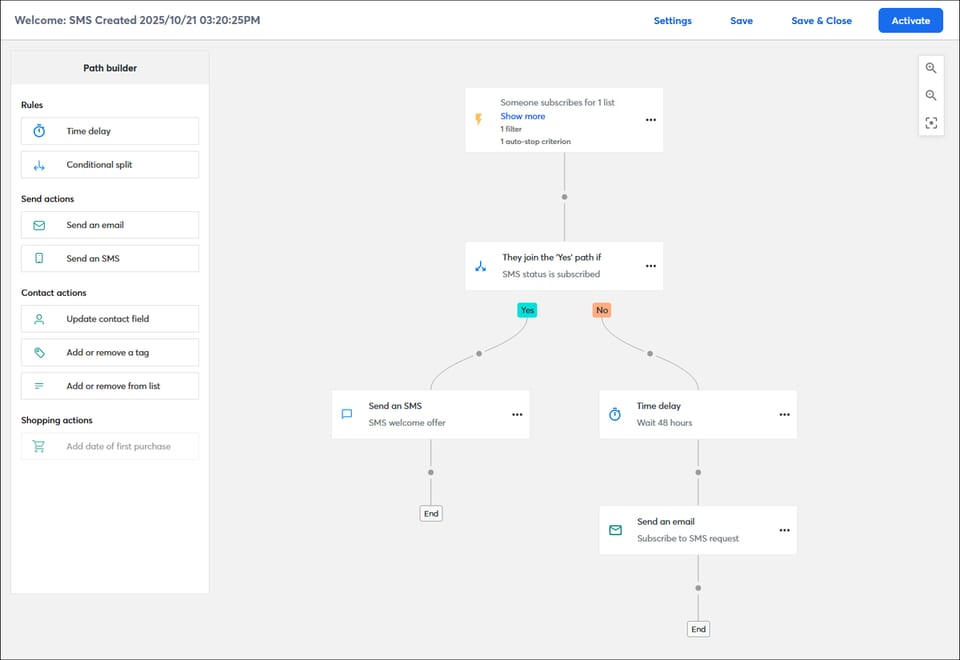
Constant Contact's Automation Path Builder supports a single trigger per path. On the Standard plan, you're limited to three active automation paths using pre-built templates only. Custom paths require Premium. This works for welcome sequences and birthday emails. It doesn't work for conditional logic that responds to how a contact behaves across multiple touchpoints.
Source: Constant Contact
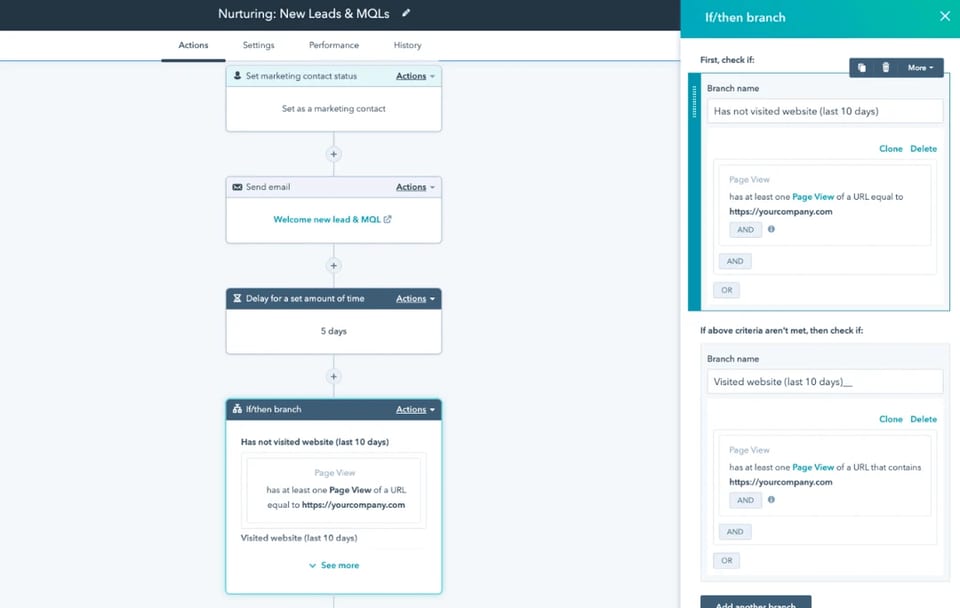
HubSpot's marketing automation workflows support multi-step, branching sequences triggered by contact behavior, lifecycle stage, form fills, website visits, and more. A workflow can send an email, wait for a click, branch based on which link was clicked, update a deal stage in the CRM, notify a sales rep, and trigger a follow-up sequence, all automatically.
Source: HubSpot
The Breeze Prospecting Agent goes further by monitoring prospects for buying signals (leadership changes, funding rounds, engagement spikes), drafting personalized outreach from the full CRM history, and executing campaigns around the clock.
For businesses where email is one piece of a larger sales and marketing operation, HubSpot's depth is hard to match.
Pricing tells you who each platform is built for
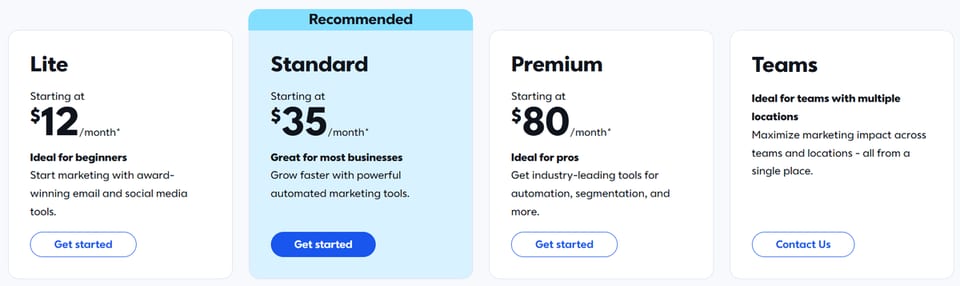
Constant Contact's pricing is straightforward: pick a plan (Lite, Standard, or Premium), and the price scales with your contact count. Lite starts at $12/month for up to 500 contacts. Standard starts at $35/month. Premium starts at $80/month.
The math changes as your list grows. At 5,000 contacts, you're paying $80/month on Lite or $110/month on Standard. Constant Contact bills based on the highest number of active contacts you've ever had, meaning deleting contacts doesn't lower your tier. If you exceed send limits for two consecutive months, the account is automatically upgraded to the next billing tier without prior consent.
Source: Constant Contact
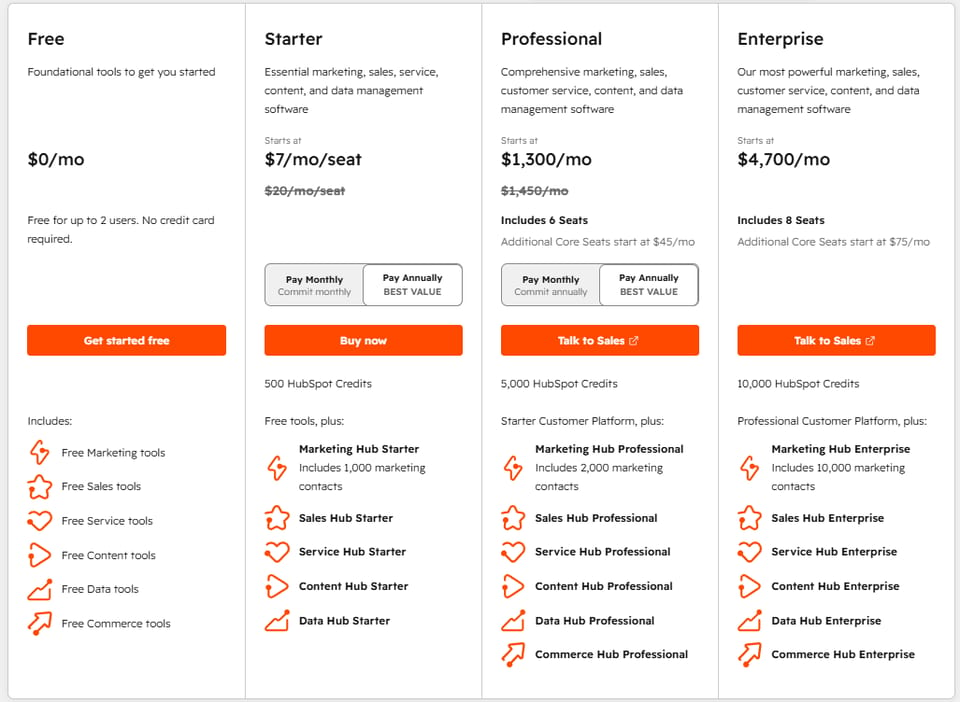
HubSpot's pricing is more complex. The permanent free CRM includes contact management, basic email (2,000 sends/month with HubSpot branding), forms, and landing pages. The Starter Customer Platform bundles all hubs at $7/seat/month (annual).
Source: HubSpot
The real costs appear at Professional and Enterprise. Marketing Hub Professional runs $1,300/month with a $3,000 mandatory onboarding fee. Marketing Hub Enterprise is $3,600/month with a $7,000 onboarding fee. Add Sales Hub Professional at $90/seat/month and its own $1,500 onboarding fee. When subscribing to multiple Hubs at different tiers, all Core Seats are billed at the rate of the highest tier, a hidden cost for organizations mixing plans across departments.

Source: HubSpot
The pattern is clear. Constant Contact charges based on list size and stays predictable at small scale. HubSpot charges based on seats, hubs, contacts, and usage, with costs that make sense only when the platform replaces multiple other tools.
The email list problem neither platform solves
Here's what gets overlooked in most platform comparisons: the quality of your email list determines whether any of these features matter.
Email lists decay at roughly 2.1% per month. People change jobs, abandon addresses, and let domains expire. A list of 10,000 contacts loses over 200 valid addresses every month. Within a year, more than 2,000 of your contacts may be dead weight, generating bounces, dragging down your sender score, and reducing inbox placement for the subscribers who want to hear from you.
Constant Contact's 97% deliverability rate assumes you're sending to valid addresses. HubSpot's automation and personalization only work if emails reach real inboxes. Both platforms offer basic bounce handling, but by the time a hard bounce is recorded, the damage to your sender reputation is already done.
This is where mailfloss fills a gap that neither platform addresses on its own.
mailfloss keeps both platforms performing
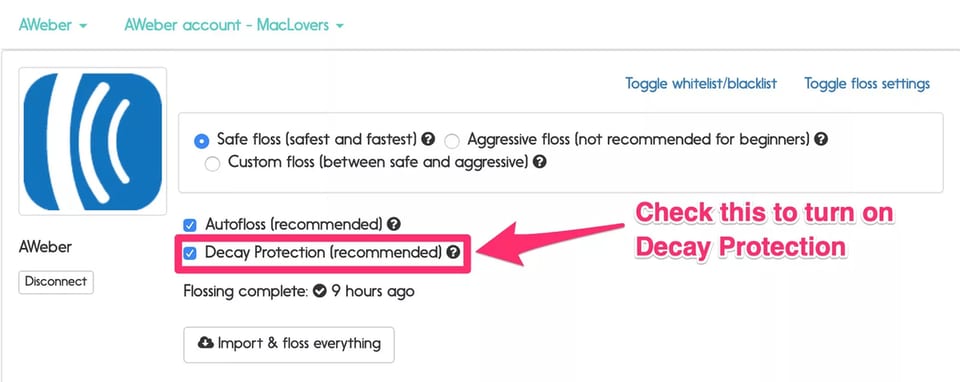
mailfloss connects directly to both Constant Contact and HubSpot and runs automated daily verification on every new contact added to the list. Invalid, fake, disposable, and risky addresses are identified and acted on automatically, before you send a single campaign to them.

Setup takes about 60 seconds: connect your ESP, configure your preferences (auto-delete, auto-unsubscribe, or tag for review), and mailfloss handles the rest. Autofloss scans connected ESPs every day for newly added invalid addresses, processing only new contacts since the last run.
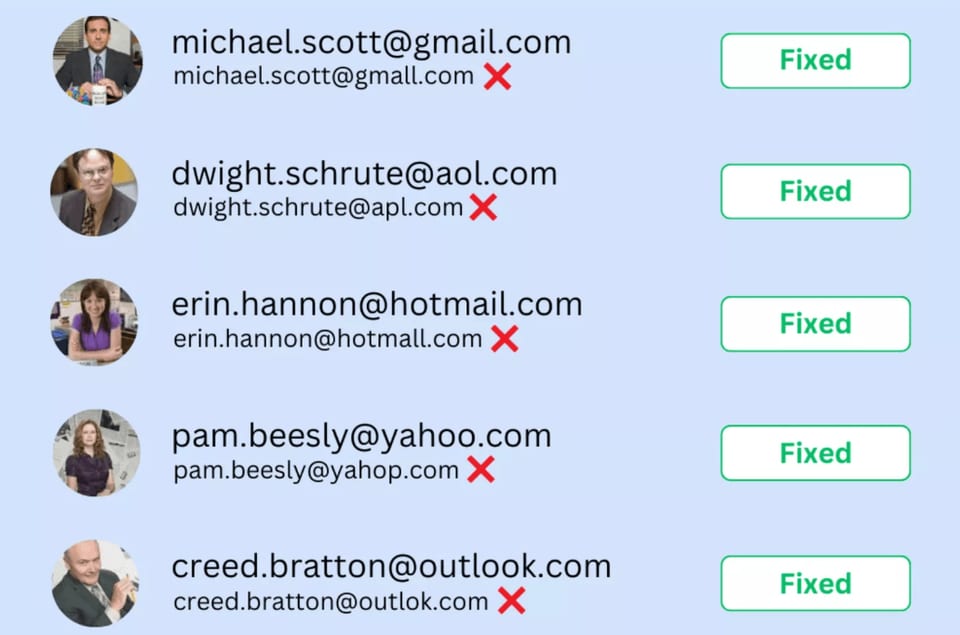
The Auto Typo Fixer adds a layer most verification tools don't offer. When someone signs up with "gmial.com" instead of "gmail.com," mailfloss corrects the address and syncs it back to the ESP. Most tools flag the typo and move on. mailfloss recovers the subscriber.
The verification engine runs multiple checks per address: syntax validation, domain and mail server verification, SMTP-level mailbox probing, disposable address detection, role-based address flagging, and spam trap identification. The proprietary Deep Clean Engine handles hard-to-verify domains like Yahoo and AOL that many verification tools mark as accept-all because they're difficult to check.
After a deliverability crisis involving 647 spam traps, NAMS deployed mailfloss and achieved a 99% Sender Score. Their CMO described it as "the only piece of software that I use every single month that I don't even have to think about." (NAMS Case Study)
For Constant Contact users, clean lists mean the 97% deliverability rate holds. For HubSpot users, clean data means automation triggers fire correctly, segments stay accurate, and AI features work with reliable information.
Segmentation and contact management compared
How each platform organizes contacts reveals its priorities.
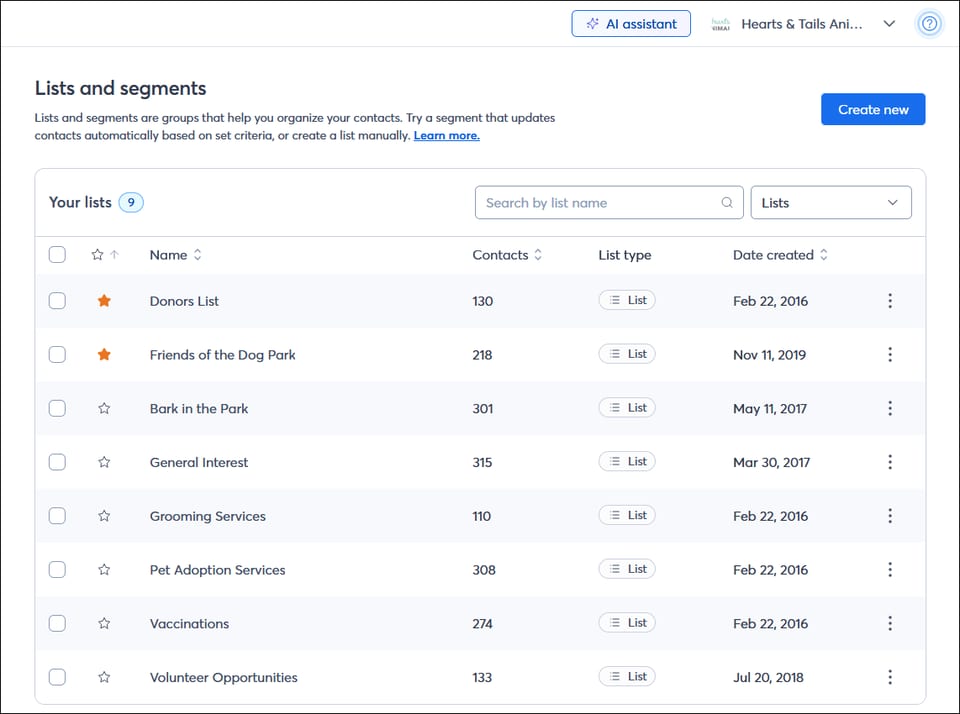
Constant Contact uses a three-layer system: lists (containers), tags (cross-list labels), and segments (dynamic filters). Segments auto-refresh before each send and can filter on ten categories including email behavior, SMS activity, and website visits. The limitation: Lite allows only 1 active custom segment, Standard allows 10. E-commerce segments are Premium-only. Locking segmentation behind higher tiers is a real constraint for businesses that want to target different audiences without paying for the top plan.
Source: Constant Contact
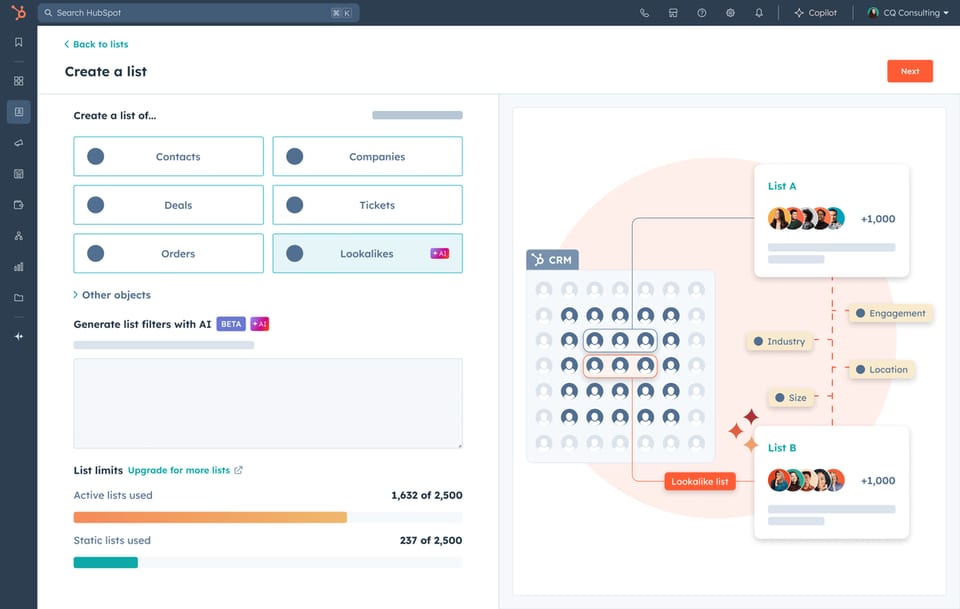
HubSpot's audience segments update in real time based on CRM properties, behavioral signals, and intent data. Because the CRM tracks every interaction across marketing, sales, and service, segments can incorporate deal stage, support ticket history, website page views, email engagement, and custom properties. Lookalike Lists use AI to find prospects matching your best customers. The segmentation is strong, but only justifies the cost if your business uses enough CRM data to make granular targeting worthwhile.
Source: HubSpot
mailfloss adds a different dimension to contact management: verification status. When mailfloss scans a list, it categorizes each address as Passed, Undeliverable, or Risky, and can automatically tag or update custom fields in the connected ESP (Pro plan). This means your Constant Contact segments or HubSpot lists can exclude unverified contacts before a campaign goes out.
Brandon McDonald, Director of Demand Generation at Randstad USA, described mailfloss as "the only game in town" when evaluating enterprise-scale HubSpot verification tools. (Randstad USA Case Study)
AI features take different approaches
Both platforms have invested in AI, but with different goals.
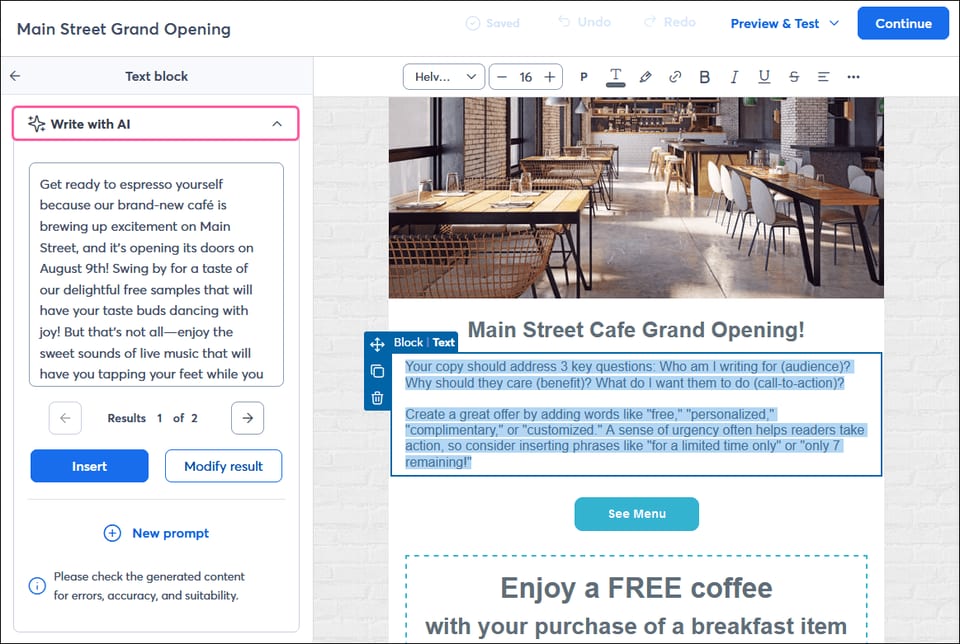
Constant Contact's AI is built for speed. The AI Content Generator produces a complete email (layout, copy, and images) from a short prompt. The Campaign Builder generates a full multi-channel campaign plan from a stated goal. The June 2026 ChatGPT app integration lets users create campaigns inside ChatGPT and send them through Constant Contact. The AI targets the small business owner who needs to publish a campaign today.
Source: Constant Contact
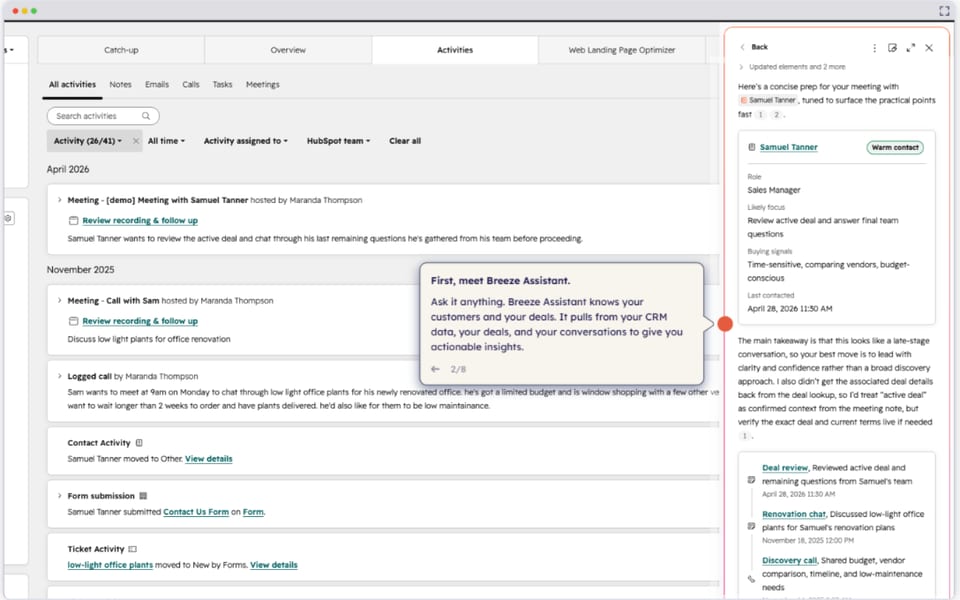
HubSpot's Breeze AI is broader and more autonomous. It spans content writing, prospecting, customer service, and data analysis across all hubs. The Breeze Customer Agent resolves over 50% of customer conversations without human involvement. The Data Agent answers plain-language questions about your customers by searching CRM records, call recordings, and email threads. HubSpot's AI is designed to run parts of your business, not just draft an email.
Source: HubSpot
Multichannel capabilities compared
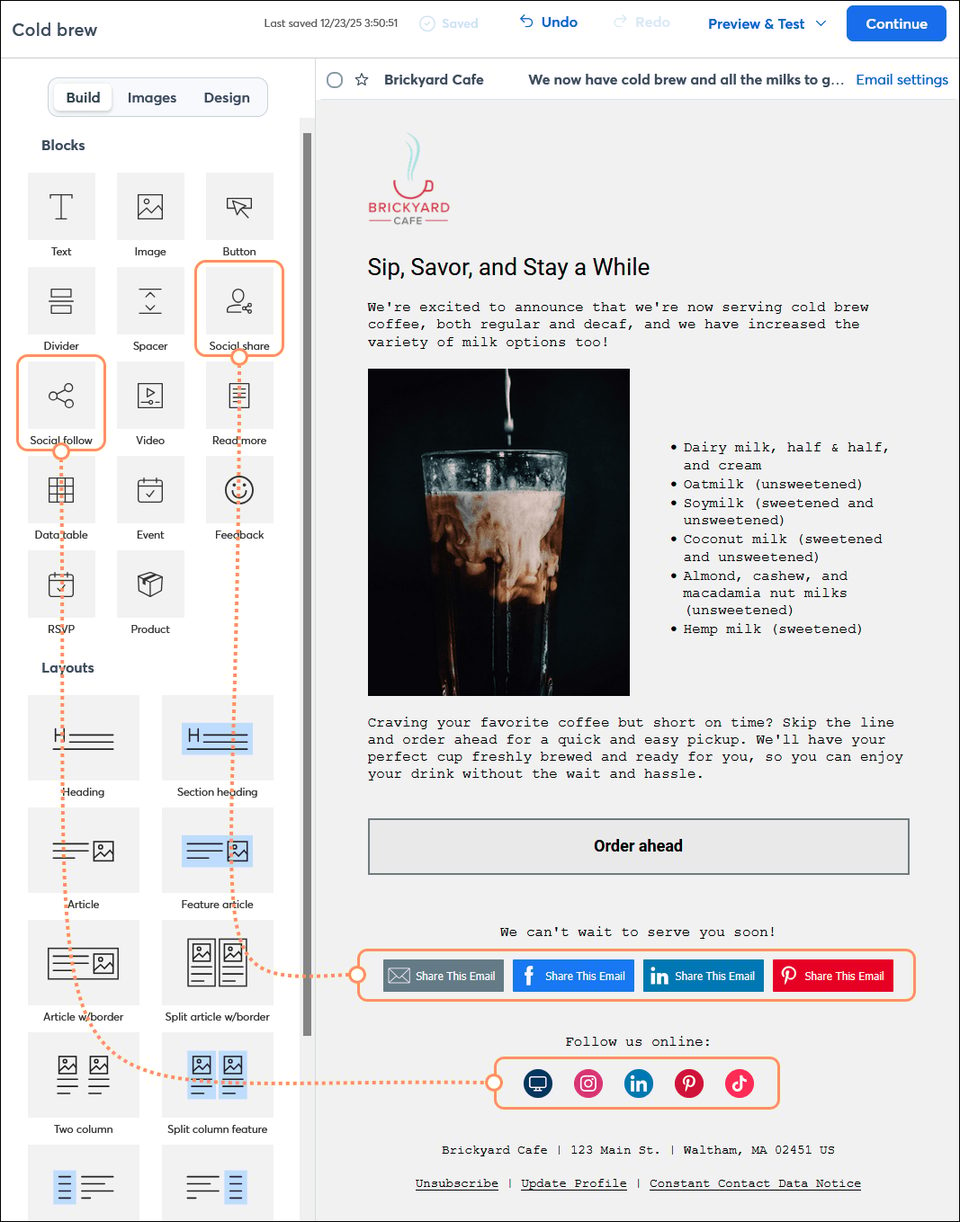
Constant Contact covers email, SMS, social media scheduling, event marketing, and landing pages in one platform. The social media layer supports organic posting to Facebook, Instagram, LinkedIn, and TikTok, plus paid advertising on Facebook, Instagram, Google (via Kliken), and TikTok. SMS is available as an add-on starting at $10/month for 500 messages, with email and SMS steps combinable in a single automation path.
Source: Constant Contact
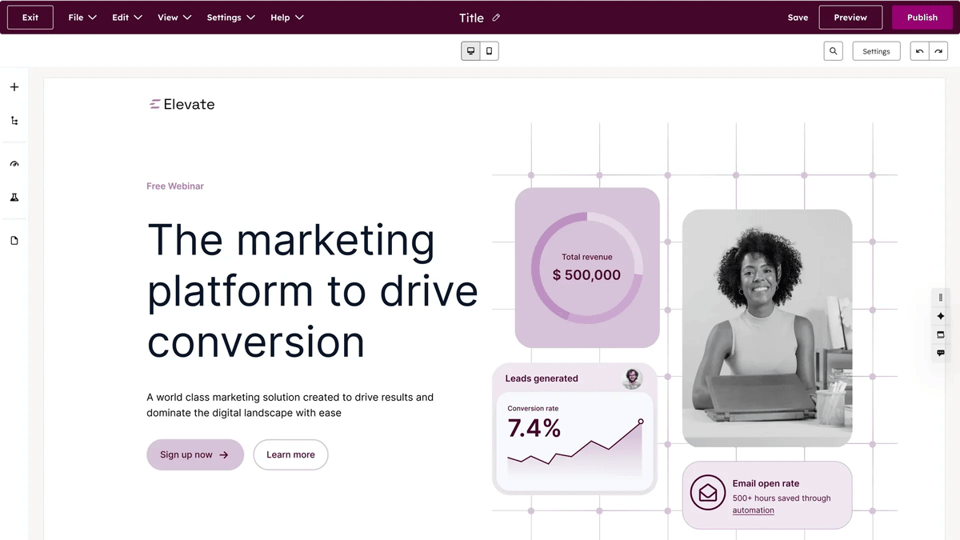
HubSpot's multichannel reach is wider. Beyond email, the platform includes social media management, blog and website hosting (Content Hub), paid ad management, live chat, chatbots, WhatsApp, Facebook Messenger, video marketing, and podcast software (beta). Content Remix turns a blog post into social posts, email copy, and video scripts in one step.
Source: HubSpot
For a small business that needs email, social posting, and event promotion, Constant Contact covers the bases. For a company running content marketing, paid ads, sales outreach, and customer service across multiple channels, HubSpot connects the data across all of them.
Integration ecosystems show platform maturity
Constant Contact connects to 300+ apps through its marketplace, including Shopify, WooCommerce, Salesforce, Xero, and DonorPerfect. Its V3 REST API covers contacts, campaigns, events, segments, and reporting, with OAuth2 authentication and a 99.99% uptime SLA.
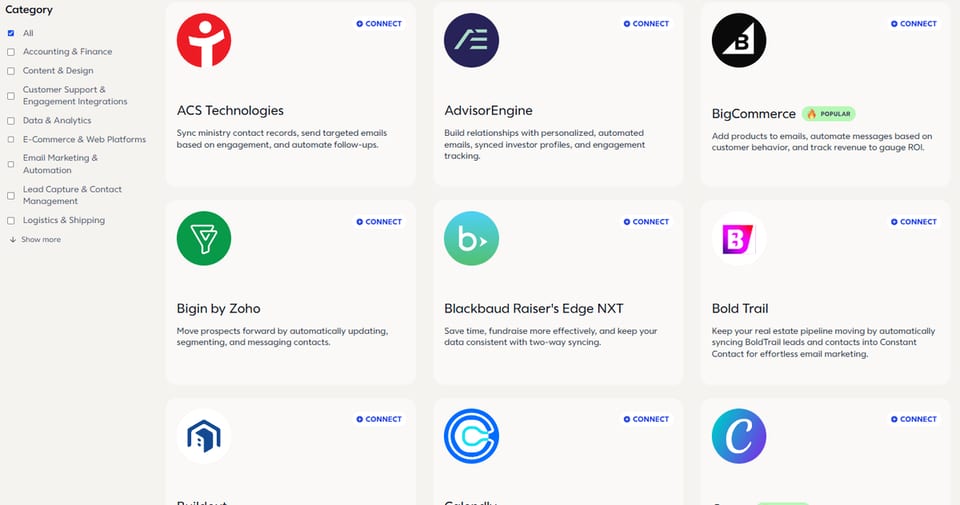
Source: Constant Contact
HubSpot's App Marketplace has over 2,000 integrations with 2.5 million active installs. The developer platform supports UI extensions, custom objects, serverless functions, and programmable automation with JavaScript and Python inside workflows. The ecosystem is deeper, reflecting HubSpot's position as a platform other tools build on.
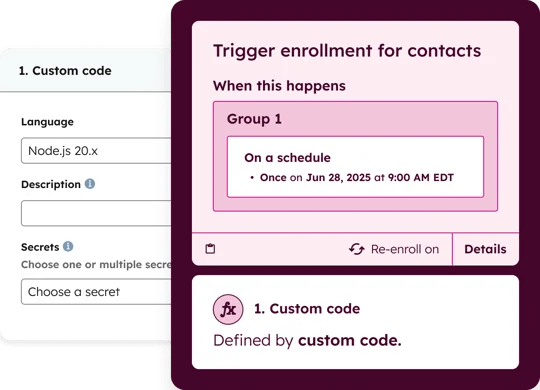
Source: HubSpot
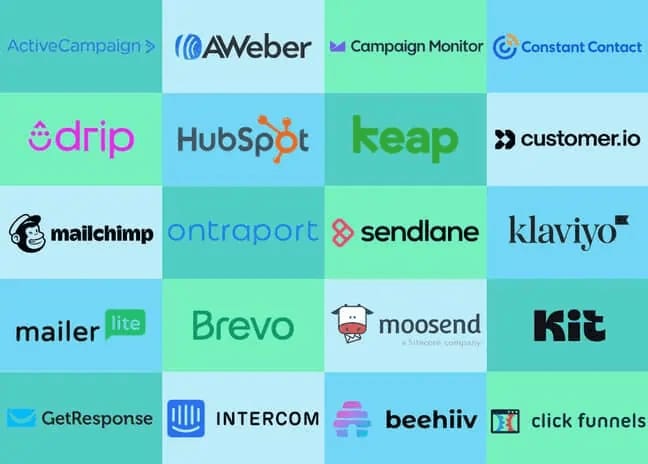
mailfloss integrates with both. Its 40 native ESP integrations include Constant Contact and HubSpot, plus Klaviyo, ActiveCampaign, Mailchimp, and more. Zapier access is available on all plans for connecting to additional tools. For businesses that switch ESPs, mailfloss continues working regardless of which platform you move to.
Reporting and analytics compared
Constant Contact's reporting provides drill-down views where every metric (opens, clicks, bounces, unsubscribes) links to the individual contacts behind it. A click heat map shows which links received the most engagement. Bot-click filtering separates real clicks from automated security scanners. The Report Builder (Standard and above) creates custom reports across email and SMS with flexible date ranges. For campaign-level analysis, it's clear and effective.
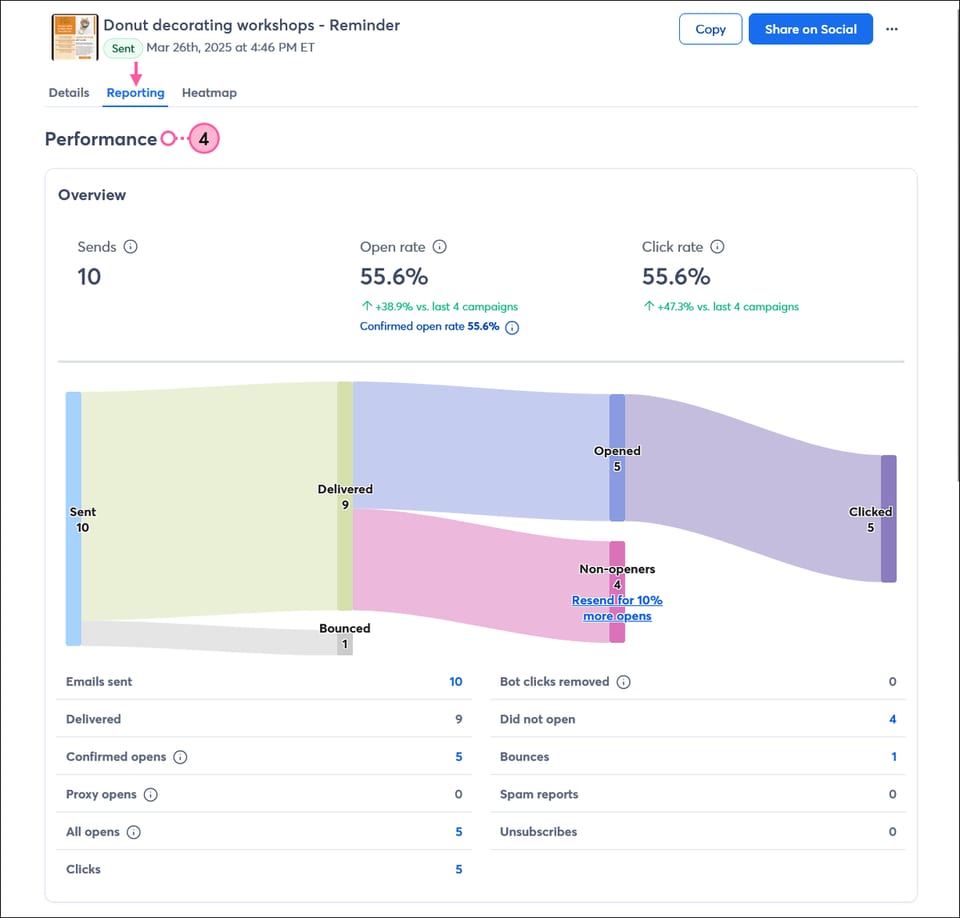
Source: Constant Contact
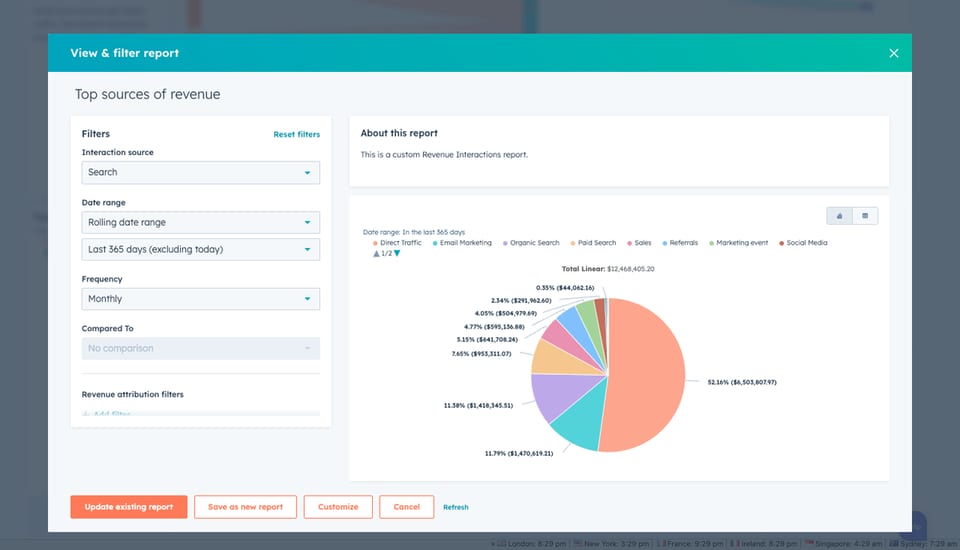
HubSpot's Advanced Marketing Reporting connects campaign data to revenue through multi-touch attribution and customer journey analytics. The Pathfinder report traces a contact's complete journey from first touch to closed deal. Because reporting draws from the same CRM used by sales and service, it can answer questions like "which email campaign generated the most closed revenue" rather than just "which email had the highest open rate."
Source: HubSpot
The gap is clear: Constant Contact tells you how your emails performed. HubSpot tells you how your emails contributed to business results.
But both analytics are only reliable if the underlying list is clean. Open rates, click rates, and revenue attribution all distort when a significant portion of your sends bounce or land in spam folders. mailfloss provides its own reporting layer: a dashboard showing verification results over time (Passed, Undeliverable, Risky), giving visibility into list health trends that neither platform surfaces on its own.
Fred Owen reported that open rates increased on average by 4% after deploying mailfloss. (mailfloss Reviews)
Security and compliance compared
Constant Contact is hosted on Google Cloud Platform with TLS encryption using 256-bit RSA keys, daily full backups with hourly incrementals, and certification under the EU-US Data Privacy Framework. It processes personal data as a GDPR data processor and enforces CAN-SPAM compliance at the platform level.
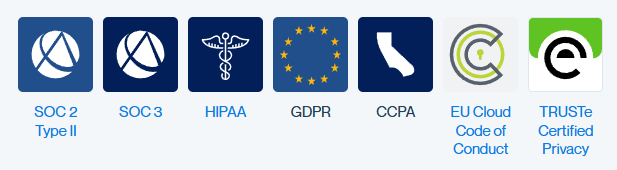
HubSpot holds a SOC 2 Type II attestation, an independent HIPAA attestation, and is EU Cloud Code of Conduct Level 2 compliant. Data is encrypted at rest with AES-256 and in transit with TLS 1.2/1.3. An EU data center is available for organizations needing EU data residency. HubSpot publishes AI model cards detailing how each AI system interacts with customer data.
Source: HubSpot
For regulated industries or organizations with strict data handling requirements, HubSpot's security posture is more thoroughly documented. Constant Contact's security is solid for SMB needs but less formally verified.
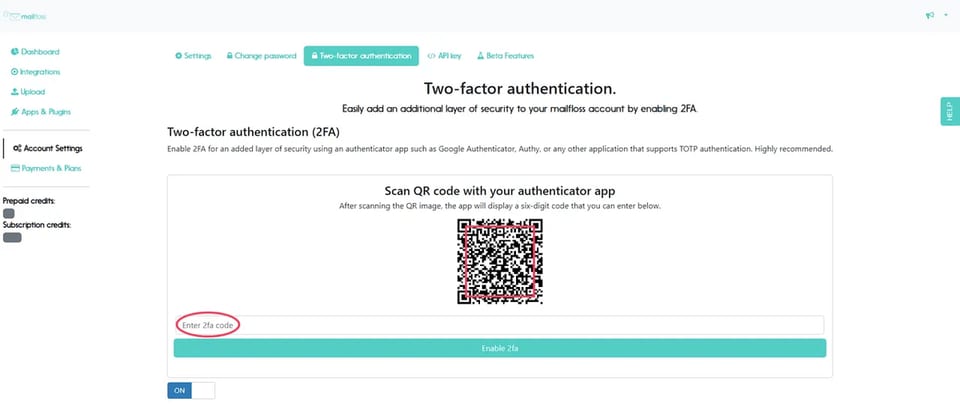
mailfloss processes email data through DigitalOcean and AWS infrastructure, declares GDPR compliance, and provides a Data Privacy API for programmatic data subject requests. Two-factor authentication is available, and SSO is included on the Pro plan.
Constant Contact vs HubSpot vs mailfloss: Which should you choose?
The right answer depends on what your business needs today, not what you might need someday.
Choose Constant Contact if:
- You're a small business or nonprofit focused on email marketing and events
- You want to send your first campaign within an hour of signing up
- Phone support matters to you more than automation
- Your budget is under $100/month and you want predictable costs
- You don't need CRM, sales pipeline, or customer service tools
Choose HubSpot if:
- You need marketing, sales, and service connected on a single platform
- Multi-step automation and behavioral workflows are essential to your strategy
- You're willing to invest in a system that grows with your business
- Your team can dedicate time to learning and configuring a complex platform
- You want AI that goes beyond email into prospecting, data analysis, and customer support
Add mailfloss to either if:
- You want accurate engagement metrics and dependable inbox placement
- You're tired of paying for invalid email addresses on your list
- You value automated list hygiene that runs daily without your involvement
- You understand that sender reputation determines whether your emails reach real people
Start your 7-day free trial and see the difference clean data makes.
The best email marketing setup isn't about choosing the most feature-rich platform. It's about matching the right sending tool to your business and making sure the data underneath it is clean. Constant Contact or HubSpot handles the sending. mailfloss handles the list. Together, they form a stack where every campaign reaches the people it's meant for.
Eugenia Brock, Email Marketing Specialist, reported that mailfloss saved her "literally hours of work every single week" compared to manual cleanup. (mailfloss Reviews)
Constant Contact vs HubSpot vs mailfloss FAQ
What is the main difference between Constant Contact and HubSpot?
Constant Contact is an email marketing platform with built-in social media posting, SMS, and event management, designed for small businesses and nonprofits. HubSpot is a full customer platform combining CRM, marketing automation, sales pipeline management, customer service, content management, and commerce tools. Constant Contact is for businesses that primarily need email marketing. HubSpot is for businesses that need their marketing, sales, and service teams working from shared data.
Which platform is cheaper for email marketing?
Constant Contact starts at $12/month for up to 500 contacts on the Lite plan, making it more affordable at small scale. HubSpot offers a permanent free tier with 2,000 email sends per month (with HubSpot branding), but paid Marketing Hub plans start at $20/seat/month for Starter and jump to $800/month for Professional (plus a $3,000 mandatory onboarding fee). For businesses that only need email marketing, Constant Contact is typically less expensive. For businesses replacing multiple tools with HubSpot, the higher cost may reduce total spending.
Do I need mailfloss if I'm already using Constant Contact or HubSpot?
Both platforms include basic bounce handling, but they react to bad addresses after the damage is done. Email lists lose roughly 2.1% of valid addresses every month through natural decay. mailfloss scans your list daily and removes invalid addresses before they generate bounces, protecting your sender reputation. It also fixes common email typos and syncs corrections back to your ESP, recovering subscribers that would otherwise be lost.
Which platform has better marketing automation?
HubSpot is significantly stronger. Its workflow builder supports multi-step branching sequences with triggers based on contact behavior, lifecycle stage, deal properties, and more. Constant Contact's Automation Path Builder is limited to a single trigger per path, with only three active paths allowed on the Standard plan (pre-built templates only). Custom automation paths require Constant Contact's Premium tier.
Which platform is better for nonprofits?
Constant Contact is the stronger fit for most nonprofits. It offers a 30% prepay discount for nonprofit organizations, built-in event management with ticket sales and RSVP tracking, and phone support on every paid plan. The platform integrates with DonorPerfect for donor management. HubSpot offers nonprofit pricing through its HubSpot for Nonprofits program, but the platform's breadth and complexity make it a better fit for larger nonprofits with dedicated marketing staff.
Can mailfloss connect to both Constant Contact and HubSpot?
Yes. mailfloss integrates with 40 ESP platforms, including both Constant Contact and HubSpot. Once connected, it runs daily automated verification on each platform independently. One limitation: real-time verification at the point of email entry (Instafloss) is available for HubSpot but not for Constant Contact integrations.
Which platform has better AI features?
It depends on what you need AI to do. Constant Contact's AI focuses on speed: generating full email drafts from prompts, recommending subject lines, and planning multichannel campaigns from a single goal. HubSpot's Breeze AI is broader and more autonomous, spanning content creation, sales prospecting, customer service resolution, and plain-language data queries across the full CRM. Constant Contact's AI helps you send faster. HubSpot's AI helps you operate differently.
How do the platforms handle email deliverability?
Constant Contact claims a 97% deliverability rate backed by a dedicated deliverability team that monitors new signups and list uploads. HubSpot provides standard deliverability tools including SPF, DKIM, and DMARC authentication. Neither platform proactively verifies whether individual email addresses on your list are still valid. mailfloss fills this gap by running daily verification across either platform, identifying invalid addresses before they cause bounces that damage sender reputation.
Whichever you pick, mailfloss keeps its list clean: see Constant Contact email verification and HubSpot email verification.
Related comparisons: Iterable vs HubSpot, Klaviyo vs HubSpot, and Braze vs HubSpot.
We write from the practical side of email list cleaning: what helps marketers keep real subscribers, reduce bounces, and avoid turning hygiene into another recurring chore.