
Implementing Laravel Email Validation: Tips for Developers and Marketers
Learn effective Laravel email validation techniques to improve data quality, reduce bounces, and enhance marketing engagement.


How should Laravel email verification be implemented?
Laravel email verification should combine framework validation rules, user-friendly typo feedback, server-side checks, and clear handling for risky results. Syntax checks are only the first layer; marketers also need duplicate handling, suppression rules, and list-quality workflows before contacts enter campaigns.
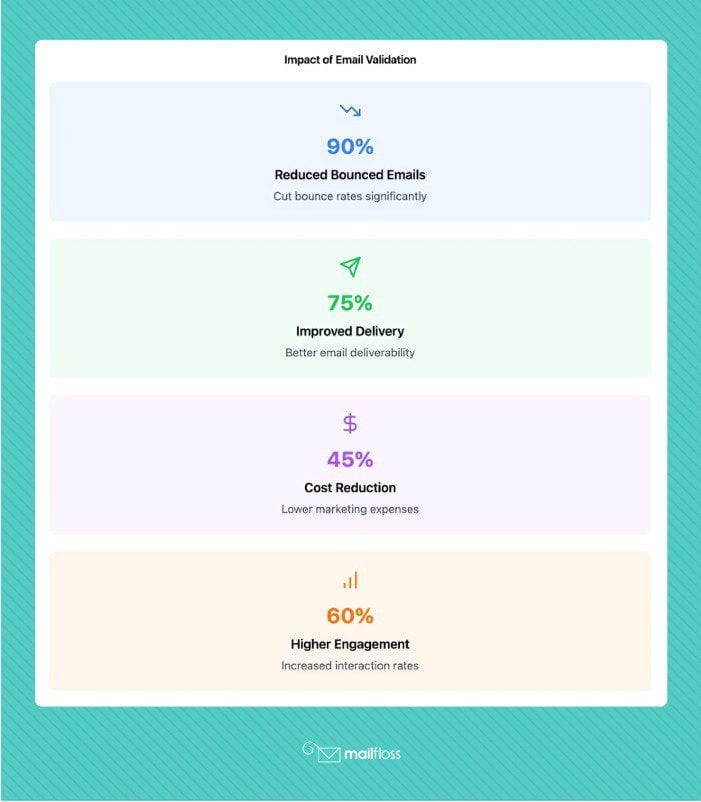
Email validation is a crucial component in improving data quality, reducing bounced emails, boosting deliverability, and enhancing engagement rates. Laravel provides powerful options for both built-in and custom email validation methods to help you achieve these goals.
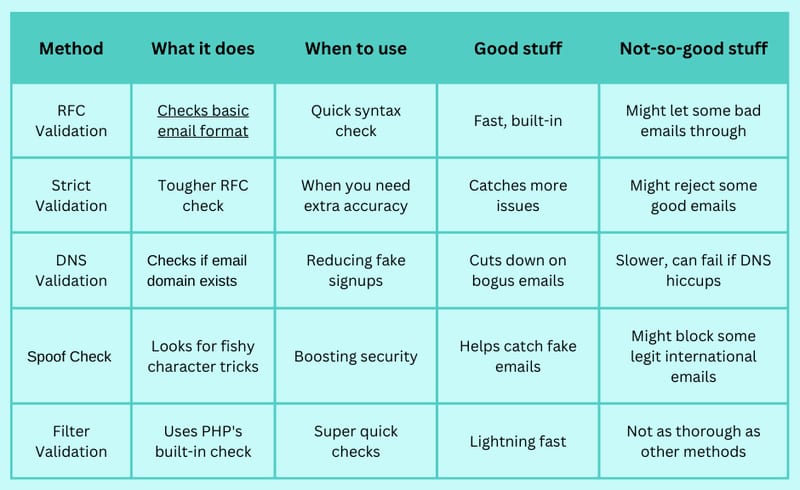
Validation Methods Compared
Let's break down the different email validation methods in Laravel. Each has its own strengths and weaknesses:
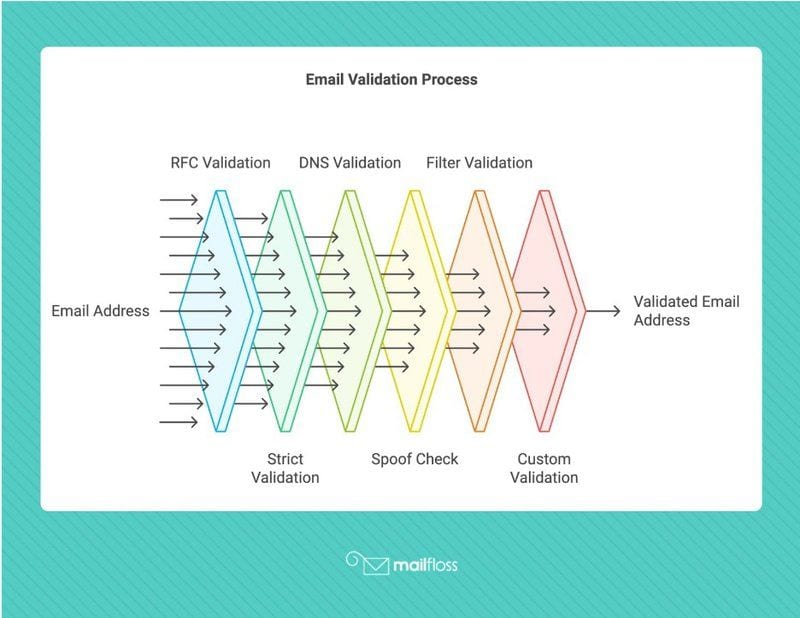
Key Benefits
- Cut bounced emails: BCC Software markets its own email verification service as reducing bounces by up to 90%.
- Enhance email deliverability: Improve overall delivery rates.
- Reduce marketing costs: Save on resources by targeting valid emails.
- Increase security: Protect against common vulnerabilities in email collection.
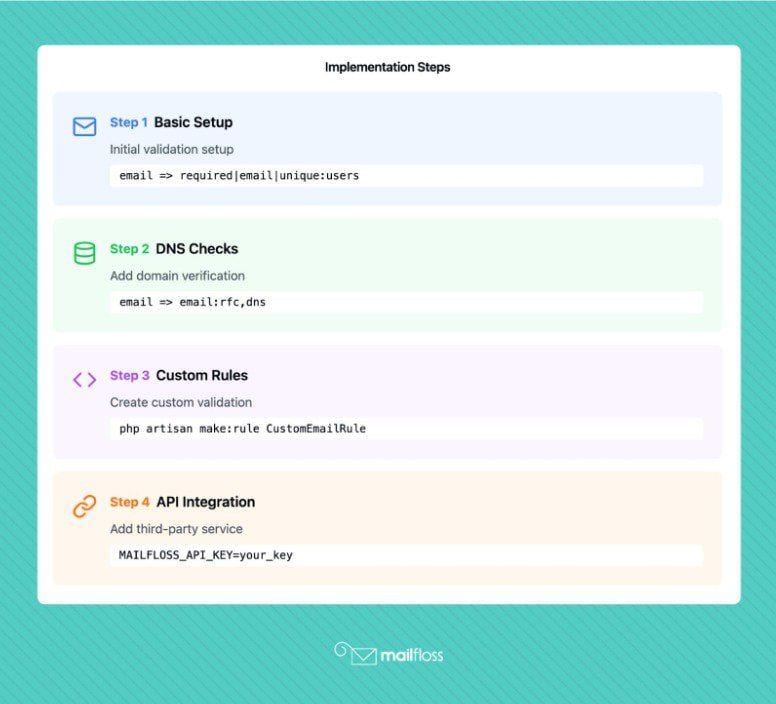
Basic Setup
Here's how to set up basic email validation in Laravel:
use IlluminateSupportFacadesValidator;
$validator = Validator::make($request->all(), [
'email' => 'required|email|unique:users',
]);
if ($validator->fails()) {
return redirect('register')
->withErrors($validator)
->withInput();
}
This setup ensures the email is entered, correctly formatted, and unique within your user database.
Video – Improve Email Validation With Laravel
Adding Extra Validation Power
For more advanced needs, consider using additional packages such as unicodeveloper/laravel-email-validator for enhanced checking:
composer require unicodeveloper/laravel-email-validatorApply it with:
'rules' => [
'email' => 'required|email',
],
Advanced Techniques
DNS Checks
For validation that confirms an email domain has a valid MX record (not a guarantee it will accept a message), implement DNS checks:
$validated = $request->validate(['email' => 'email:rfc,dns']);
Custom Validation Rules
For business-specific needs, Laravel allows you to define custom rules:
php artisan make:rule CustomEmailRulepublic function passes($attribute, $value) {
$domainPart = explode('@', $value)[1] ?? null;
return $domainPart && $domainPart != 'example.com';
}Real-Time Email Verification with APIs
Integrate services like ours at mailfloss for high-accuracy, real-time email checks:
// Add to your .env and config files
'MAILFLOSS_API_KEY' => 'your_api_key_here',
// Use Guzzle to send API requests
$isValid = $this->mailflossService->verifyEmail($email);
Email List Validation
Handling bulk email validation efficiently is key, especially with large datasets. Use Laravel's validation rules to check each email against RFC and DNS standards:
$validator = Validator::make($request->all(), [
'emails.*' => 'required|email:rfc,dns'
]);
Auto-cleaning Lists
Set up automatic cleaning to maintain data hygiene:
// Scheduled command in Laravel
$schedule->command('email:clean')->weekly();
Testing Your Setup
Ensure your setup is flawless by creating comprehensive tests with Laravel's testing features:
// Use Pest PHP for feature tests
dataset('email-validation-rules', [
'valid email' => ['[email protected]', true],
'invalid domain' => ['test@invalid', false],
]);
it('validates email addresses correctly', function ($email, $isValid) {
$response = $this->post('/register', ['email' => $email]);
$isValid ? $response->assertSessionHasNoErrors('email') : $response->assertSessionHasErrors('email');
});
Conclusion
Implementing effective email validation in Laravel not only improves your data quality but also enhances your marketing efforts by ensuring that communications reach genuine users. Remember, every new subscriber's email address checked reduces risks and bounces, driving better engagement and deliverability.
We write from the practical side of email list cleaning: what helps marketers keep real subscribers, reduce bounces, and avoid turning hygiene into another recurring chore.